
What is Rinnai tankless repair?
Rinnai tankless repair is the diagnosis and repair of a gas tankless water heater made by Rinnai. A Rinnai unit heats water only when a tap opens: cold water flows in, a sensor confirms the flow, the burner lights, and the heat exchanger warms the water on its way to the tap. When any part of that chain stops working — the ignition, the gas valve, the flow sensor, the fan, or the heat exchanger itself — the unit either stops heating, heats unevenly, or shuts itself down and shows a code. Repair means finding which link failed and fixing that link, rather than guessing at the whole unit.
Most Rinnai faults fall into a small set of patterns, and a good repair starts by naming the pattern. A unit that will not light at all is a different job from a unit that lights and then cuts out. A unit that shows a code is a different job from a unit that heats but never gets hot enough. And a unit that leaks is a different job again. The symptoms point at the system, and the system points at the part. That is why the first questions on a call are always the same: what is the water doing, is a code showing, and when did it start?
Pro Tankless El Dorado is not Rinnai, and this page makes no claim of Rinnai authorisation, dealership, or warranty coverage. We are a referral service, and we connect callers in El Dorado Hills with a local provider who repairs Rinnai tankless units. The provider works on the unit in your home, reads the code the unit is showing, and tells you what it needs. If you need tankless water heater repair in El Dorado Hills for a Rinnai unit, that call is the starting point — not a parts order, and not a replacement decision made over the phone.
Rinnai units are common in El Dorado Hills, and they show up in both newer and older homes. Newer builds often have them fitted from the start, and older homes often have one fitted when a tank heater was taken out. Either way, the unit is a gas appliance with a burner, a vent, and a control board, and it needs the same kind of care as any other gas tankless heater — plus attention to the details that are specific to Rinnai, like the way its codes are displayed and the way its controller talks to the unit. A repair that ignores those details can fix the symptom and miss the cause.
How is a Rinnai unit diagnosed and repaired?
A Rinnai diagnosis follows the water and the flame, in order. The provider starts with what the unit is doing right now, then works backwards through the systems that have to agree before the burner will stay lit. Nothing is taken apart until the fault has been narrowed down, because opening a gas unit without a diagnosis is how a small fault becomes a large one. The steps below are the usual order, and they apply whether the complaint is no hot water, lukewarm water, or a code that keeps coming back.
Reading the code first
A Rinnai unit that stops will usually show a code on the unit itself, or on the wall controller if one is fitted. That code is the unit's own report of where it stopped. Write down the exact code, and note whether it appears straight away or only after the unit has been running for a while. The code does not name the broken part by itself — it names the area: ignition and flame, gas supply and combustion, water flow, temperature and overheating, or venting and fan. The provider uses the code to choose where to test first, and then confirms with a physical check rather than trusting the display alone. Never keep resetting a Rinnai that returns the same code. Each reset asks the burner to light again, and if the fault is a gas or venting problem, repeated resets do not help and can make the unit harder to diagnose.
Checking ignition and flame
If the code points at ignition, or if the unit tries to light and fails, the provider checks the igniter, the flame sensor, and the gas reaching the burner. A Rinnai burner needs a spark at the right moment, a steady gas supply, and a flame that the sensor can see. A worn igniter gives a weak spark or none at all. A flame sensor coated in deposits sees the flame poorly and shuts the unit down for safety. A gas valve that is not opening fully starves the burner. Each of these gives a similar complaint — the unit clicks, or tries, and then gives up — but each has a different fix, and the fix only works if the right one is found.
Checking flow and temperature
A tankless unit only heats while water is flowing, so a flow problem looks like a heating problem. The provider checks the inlet filter for debris, the flow sensor for a stuck or sluggish reading, and the actual flow at a tap. If the flow is too low, the Rinnai may not fire at all, or it may fire and then drop out when a tap is turned down. If the flow is fine but the water is lukewarm, the heat exchanger is the next suspect: scale inside it insulates the water from the burner, so the water passes through without picking up enough heat. That is a different repair from a sensor fault, and it is usually answered with a tankless flush and descaling rather than a new part.
Checking gas, venting, and the fan
A Rinnai burner needs air in and exhaust out, in the right amounts. The provider checks the vent for blockage or damage, the fan for free movement and a clear path, and the gas supply for pressure and a clear line. A blocked vent or a failing fan can trip the unit's safety controls and shut it down mid-shower. A gas supply that is too small for the unit — or shared with other appliances in a way that starves the burner when they run together — gives lukewarm water at peak times and full heat when nothing else is running. These are not faults you can see from the front of the unit, and they are not fixed by resetting it.
Before you call, look at the controller and the unit and write down three things: the exact code if one is showing, whether the water is cold, lukewarm, or hot-then-cold, and whether the problem happens at every tap or only one. Those three answers shorten the diagnosis more than anything else you can tell the provider.
Parts, in general terms
When a part has failed, the provider replaces that part: an igniter, a flame sensor, a flow sensor, a gas valve, a fan, a control board, or a valve seal. Rinnai parts are model-specific, so the provider needs the model from the label on the unit — a photo of the label helps if the print is small. A part is only ordered once the diagnosis is certain, because a new igniter will not fix a gas problem and a new sensor will not fix a scaled heat exchanger. If the heat exchanger itself is damaged or leaking from inside, that is a different conversation, and it usually leads to talking about replacement rather than another repair.
8 warning signs your Rinnai needs repair
These are the eight signs that come up most often on Rinnai calls in El Dorado Hills. One sign on its own is a reason to call. Two or more together, or a sign that is getting worse week by week, is a reason to call now rather than waiting for the unit to stop altogether.
- An error code on the display. The unit stops and shows a code, on the unit or on the wall controller. The code may clear when you reset it and then return the next time you run hot water. A returning code is the unit telling you the same thing twice, and it will not fix itself.
- No hot water at all. The taps run cold even though the unit has power and the gas is on. This is the most urgent Rinnai sign, because a home without hot water cannot wait. Start with our no hot water repair page if you are unsure whether the fault is Rinnai-specific, but if the unit is a Rinnai and it will not fire, this page is the right one.
- Lukewarm water that never gets hot. The burner fires, the water warms, but it never reaches the temperature you set. Scale in the heat exchanger, a gas supply that cannot keep up, or a temperature sensor reading wrong can all give the same lukewarm result, and only a check of the unit separates them.
- Hot water that goes cold, then hot again. The shower runs hot, drops cold for a few seconds, and then warms up again. On a Rinnai this cold-water sandwich often means the flow has dropped below the level the unit needs to stay lit, or the unit is cycling on and off because a sensor is misreading the flow.
- The unit shuts off mid-shower. The water is fine for a minute and then stops heating, or the unit cuts out when a second tap opens. Overheating protection, a venting fault, or a flow problem can each trip the shutdown, and the pattern — when it happens, and what else is running — is the clue.
- New noise from the unit. Rumbling, banging, whistling, or a fan that sounds strained are all new sounds worth reporting. Rumbling often points at scale boiling inside the heat exchanger. Whistling can mean a restricted waterway. A strained fan can mean a venting problem. Note what the noise sounds like and when it starts.
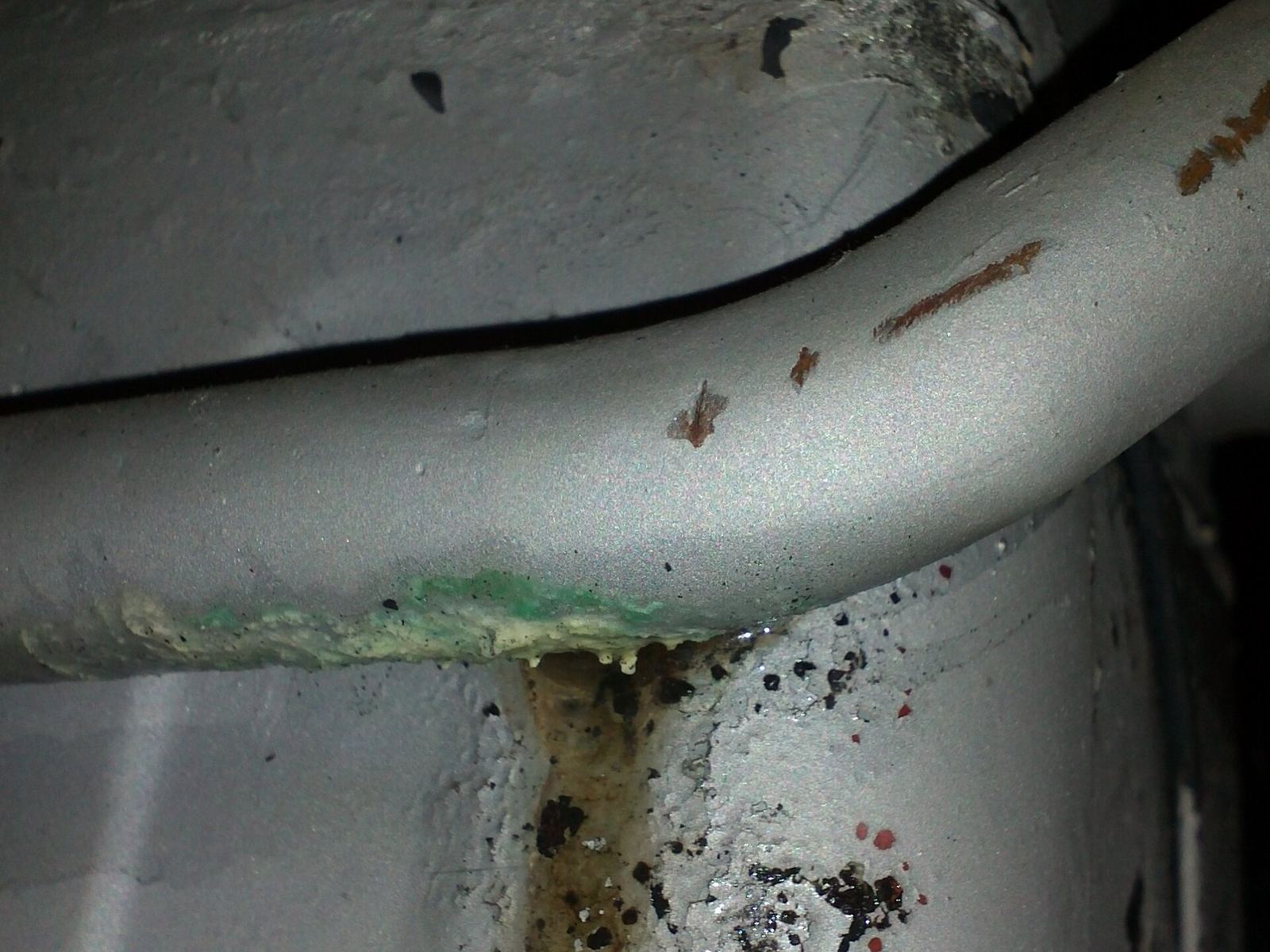
- Water leaking at or under the unit. A drip from a connection, a damp patch on the wall below the unit, or water pooling on the floor are all leaks, and a leak on a gas unit is urgent. Turn off the power, close the water shut-off valves if you can reach them safely, and call for emergency tankless repair. Do not open the casing to find the leak.
- Repeated resets to keep it running. If you have to reset the Rinnai every day, or several times a day, to get hot water, the reset is hiding a fault rather than fixing one. A unit that needs constant resetting has a part or a condition that is failing, and the next failure is usually the one that stops it for good.
What causes a Rinnai tankless unit to fail?
Most Rinnai faults have ordinary causes, and most of them build up slowly before they show. Knowing the cause matters because it decides whether the repair is a part, a clean, or a change in how the unit is used. A fault with a cause that is still there will come back after the part is changed.
Mineral scale in the heat exchanger
Every time a Rinnai heats water, minerals in the water leave a thin layer inside the heat exchanger. Over months and years that layer thickens, and it does two things at once: it insulates the water from the burner, so the water comes out cooler, and it narrows the waterways, so the flow drops and the unit works harder. A scaled unit runs hotter inside while delivering cooler water outside, and that combination trips overheating controls and shortens the life of the parts around it. Scale is the single most common cause of a Rinnai that heats poorly but has no single broken part, and it is the cause a flush is designed to remove.
Worn ignition and flame parts
Igniters and flame sensors wear out with use. An igniter that has fired thousands of times eventually sparks weakly or not at all. A flame sensor coated in combustion deposits sees the flame poorly and tells the control board the flame has gone out, so the board shuts the gas off. These are wear parts, and they fail gradually: first the unit is slow to light, then it needs a second try, then it will not light at all. Replacing the worn part restores the light, and there is nothing to be gained by waiting until it fails completely.
Flow sensor and inlet filter trouble
The flow sensor tells the Rinnai when water is moving and how fast. If it sticks, reads low, or fails, the unit either will not fire or fires and drops out. The inlet filter, a small screen where the cold water enters, can also clog with debris and choke the flow before the sensor ever sees it. Both faults give the same complaint — weak or intermittent hot water — and both are found by checking the flow at the unit rather than at the tap. A clogged filter is a clean, not a repair, but it is a clean that needs the water isolated first.
Gas and venting problems
A Rinnai burner needs a steady gas supply and a clear vent. A gas line that is too small, a valve that is partly closed, or a supply shared with other appliances can starve the burner at peak demand, so the water is hot in the morning and lukewarm in the evening. A vent that is blocked, damaged, or wrongly routed can trip the unit's safety controls and shut it down. Neither fault is visible from the front of the unit, and neither is fixed by a reset. Both are found by testing the supply and the vent rather than by replacing parts at random.
Age, demand, and a unit that no longer fits the home
A Rinnai fitted years ago for a smaller household can struggle when the household grows — more bathrooms, more showers at the same time, a new fixture that draws more water. The unit itself may be sound, but it cannot heat more water than it was sized for. That shows up as lukewarm water at peak times and full heat when only one tap is running. The answer is not always a bigger unit; sometimes it is a re-check of the sizing and the settings. But when the unit is old, scaled, and undersized all at once, the honest conversation is the one about tankless replacement rather than another repair.
What can you safely check on a Rinnai before you call?
There are a few checks any homeowner can do safely, and they genuinely help the provider. Do them in this order, and stop at the first one that does not make sense. If anything smells of gas, skip the checks entirely and follow the warning below.
- Power. Check that the unit has power: the display should be lit, and the breaker for the unit should not have tripped. A Rinnai with no display has no power, and no power means no ignition at all.
- Gas. Check that the gas is on and that other gas appliances in the home are working. If the gas is off to the whole house, the Rinnai is not the problem. Do not touch the gas valve on the unit itself beyond confirming it is open if you can see it clearly.
- Water. Check that the water is on and that cold water runs normally at the tap. If the cold flow is weak everywhere, the fault may be in the water supply rather than the heater.
- The code. Write down the exact code on the display or the controller, and note whether it appears straight away or after a few minutes of running. Take a photo of the display if you can. Do not guess at the code from memory when you call.
- The controller. If your Rinnai has a wall controller, check the temperature setting and whether the controller responds when you press it. A setting that has been knocked down, or a controller that has lost its connection to the unit, can look like a heating fault.
- The inlet filter. If you know where the inlet filter is and you can reach it safely with the water isolated, you can look at it for visible debris. If you are not sure where it is, or the water cannot be isolated, leave it — this is a small job for the provider, not a reason to flood a cupboard.
If you smell gas, do not touch any switches, do not light anything, and do not reset the unit. Leave the house, and call your gas company or the emergency services from outside. Do not go back in until they tell you it is safe. A gas leak is not a repair job to start by phone.
What not to do is just as important. Do not open the casing of a Rinnai unit. The casing covers the burner, the gas valve, and the electrics, and opening it without isolating the gas and the power is dangerous and can also disturb the seals the unit relies on. Do not keep resetting a unit that returns the same code. Do not pour descaling solution into a unit you have not isolated, and do not run a flush on a unit that is leaking. All of those jobs belong to the provider, and they belong on the visit, not before it.
The Rinnai repair visit, step by step
A Rinnai repair visit has a fixed shape, and knowing it in advance makes the call easier. The provider is not there to sell you a new unit on the doorstep. The visit is a diagnosis first, and the repair follows from what the diagnosis finds.
- 01
The call and the code
You describe the symptoms and the code, the brand and model if you know it, and when the fault started. That is enough for the provider to bring the right approach — and often the right part — to the visit.
- 02
Reading the unit
The provider reads the code from the unit and the controller, checks the power, gas, and water, and watches what the unit does when a tap opens. This is the diagnosis, and it usually takes longer than the repair that follows it.
- 03
Testing the systems
Ignition, flame, flow, temperature, gas, and venting are tested in turn. The fault is narrowed to one system, and then to one part or one condition, before anything is replaced.
- 04
The repair
The failed part is replaced, the filter is cleaned, or the flush is run — whichever the diagnosis called for. The unit is then run through its paces: hot water at one tap, then at two, and a check that the code stays clear.
- 05
What to watch next
Before leaving, the provider tells you what was wrong, what was done, and what to watch for — including when a flush is due and what a returning code would mean. If the unit is near the end of its useful life, that conversation happens now, while the unit is working, rather than later, when it is not.
What affects the cost of Rinnai tankless repair?
There is no single price for Rinnai repair, because the cost depends on what is actually wrong. A clean and a reset are not the same job as a new control board, and a flush is not the same job as a heat exchanger. What follows are the factors that move the cost, so you can understand the quote when the provider gives it — not a price list, and not a promise.
| Factor | How it affects the job |
|---|---|
| The fault itself | A clogged filter or a worn igniter is a small job. A failed control board, a gas valve, or a damaged heat exchanger is a larger one, because the part costs more and the work takes longer. |
| The model | Rinnai parts are model-specific. Some are easy to source and fit; others take longer to obtain. The model from the label on the unit decides which parts fit. |
| Scale | A scaled heat exchanger may need a flush before the real fault can even be tested. If the scale is heavy, the flush is part of the repair, not an extra. |
| Access | A unit that is easy to reach, with clear space around it and isolation valves fitted, is quicker to work on than one boxed in behind stored items or fitted without valves. |
| Gas and venting work | If the fault is in the gas supply or the venting rather than the unit, the work is different in kind, and the cost follows the work, not the part. |
| Repair or replace | When the heat exchanger is damaged, or the same fault keeps returning, the provider may advise replacement. That is a bigger job with a bigger cost, and it should be a decision, not a surprise. |
If the provider finds a fault that is not worth repairing — a heat exchanger damaged beyond cleaning, for example — they should say so plainly and explain why, before any more work is done. A repair that costs more than the unit is worth, or that only buys a few weeks, is not a repair worth doing.
When is a Rinnai fault an emergency?
Not every Rinnai fault is an emergency, but some are, and the difference is simple. A leak, a gas smell, or no hot water at all in a home that cannot do without it are emergencies — call now, and say so on the call. A lukewarm shower, a code that appears once and clears, or a unit that is noisy but still heating are urgent, but they can usually wait for a planned visit. The rule is this: water where it should not be, gas you can smell, or no hot water at all means call now. Anything else means call today and describe it clearly. If you are unsure which side of that line you are on, treat it as an emergency and call — the provider would rather hear about a fault early than late. Our emergency tankless repair page covers what happens on an emergency call and what to do while you wait.
Rinnai units are fitted in many newer homes in El Dorado Hills, including Blackstone, where newer builds often have a Rinnai from the start. If your home is new to you and you do not know the unit's history, say so on the call — the provider will check the model, the last flush, and the venting from scratch, rather than assuming any of it.
Rinnai tankless repair FAQs
What does a Rinnai error code mean?+
A Rinnai error code is the unit's own report of where it stopped. The code points at an area — ignition and flame, gas supply and combustion, water flow, temperature, or venting — rather than naming a single part. Write down the exact code and when it appears, and do not keep resetting the unit if the same code returns. The provider reads the code, then tests that area to find the actual fault.
Why is my Rinnai not making hot water?+
The most common reasons are no power or no gas to the unit, a failed igniter or flame sensor, a flow sensor that is not reading the water, a clogged inlet filter, or heavy scale in the heat exchanger. Check the power, the gas, and the water first, and note whether a code is showing. If the unit still will not heat, it needs a diagnosis — a Rinnai that will not fire can have several different causes, and they are not interchangeable.
Can a Rinnai tankless unit be repaired, or does it need replacing?+
Most Rinnai faults can be repaired: igniters, flame sensors, flow sensors, gas valves, fans, and control boards are all parts that can be replaced, and scale can be flushed out. Replacement is usually discussed when the heat exchanger is damaged, parts are no longer available for that model, or the same fault keeps returning after repair. A diagnosis comes first, and the repair-or-replace conversation follows from what it finds.
Why does my Rinnai go lukewarm when two taps are running?+
Lukewarm water at peak demand usually means the unit cannot keep up with the flow, the heat exchanger is scaled and cannot transfer heat fast enough, or the gas supply cannot feed the burner at full demand. It can also mean the unit was sized for a smaller household than it now serves. Note whether the water is hot with one tap running and lukewarm with two, and tell the provider — that pattern points straight at the cause.
How often should a Rinnai tankless unit be flushed?+
A flush is due when the symptoms say so, not on a fixed date — cooler water, weaker flow, a longer wait for hot water, or a unit that has never been flushed are the signs to act on. As a general guide, many makers suggest about once a year, and more often where the water leaves heavy mineral deposits. The provider can judge from the unit's history and what it is doing now whether a flush is due.
Is Pro Tankless El Dorado part of Rinnai?+
No. Pro Tankless El Dorado is a referral service that connects callers with a local tankless water heater provider in El Dorado Hills. We are not Rinnai, and we make no claim of Rinnai authorisation, dealership, or warranty coverage. The provider who visits repairs Rinnai units, and any warranty question about your unit should be checked with Rinnai or the company that fitted it.
Related services and areas
If the house has no hot water at all, the fastest route is no hot water repair, which covers the full diagnosis for a unit that will not heat, Rinnai or not. If the Rinnai diagnosis finds heavy scale, the next step is a tankless flush and descaling to clear the heat exchanger before any part is blamed. A leaking Rinnai is not a diagnosis job at all — see emergency tankless repair and shut the water off safely first. And if the provider finds a heat exchanger damaged beyond cleaning, the conversation moves to tankless replacement. We help Rinnai owners across El Dorado Hills, including Serrano, where larger homes put more water through their units, and Blackstone, where many newer builds have a Rinnai fitted from the start. To learn how the referral works, see our About page, or go to Contact to see what to have ready before you call.