
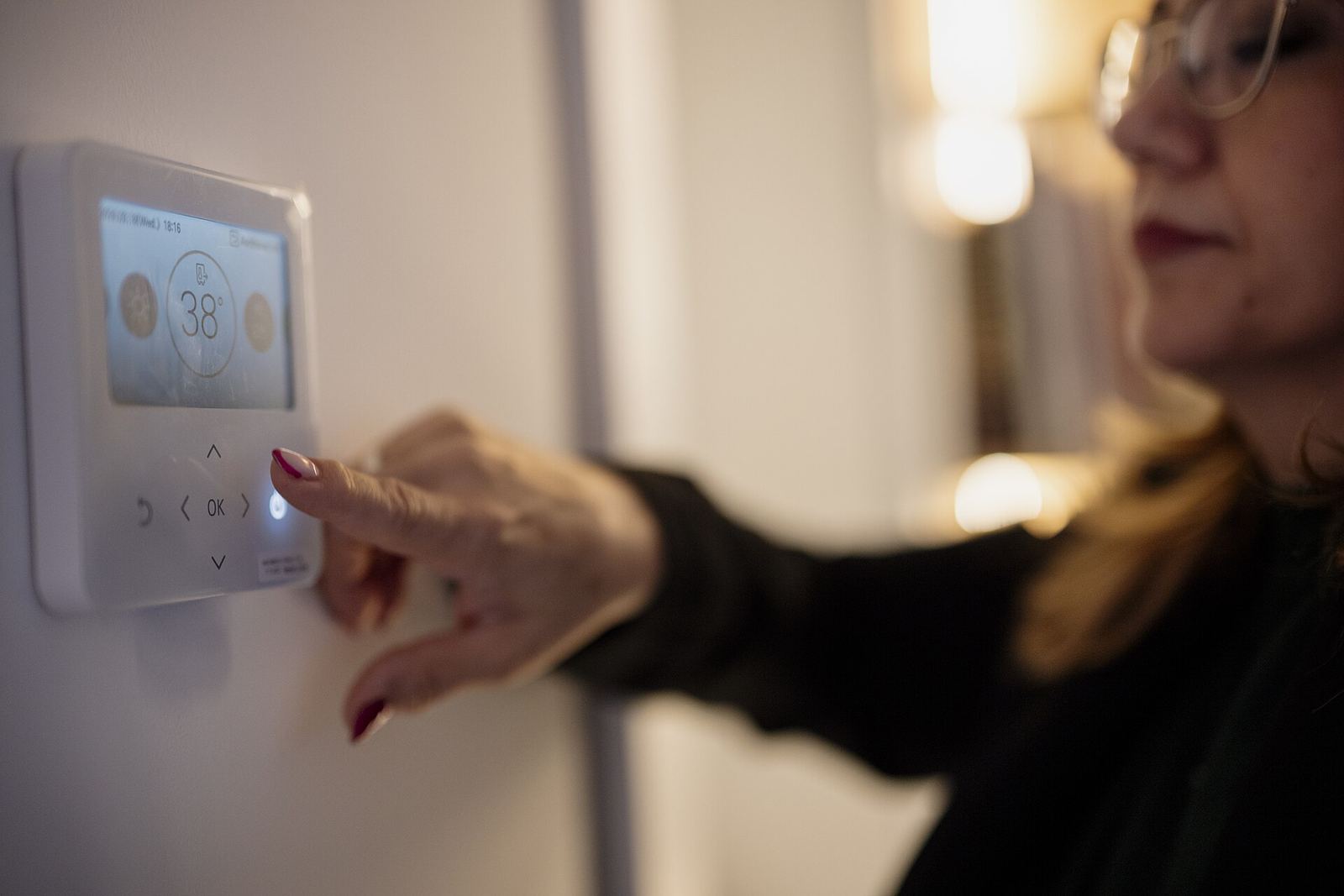
What does “no hot water” mean for a tankless unit?
“No hot water” covers three different problems, and telling them apart is half the diagnosis. The first is stone cold at every tap: the unit never fires, and the water that comes out is the same temperature as the cold supply. The second is lukewarm: the unit fires, but the water never reaches the temperature you set, no matter how long the tap runs. The third is intermittent: hot water arrives, then goes cold, then comes back — the pattern most people call a cold-water sandwich. Each pattern points at a different part of the unit, so the first thing a provider asks is not how old the unit is, but which of the three you are seeing.
A tankless heater only makes heat while water is moving through it. There is no stored tank of hot water to draw on, so when the burner does not light, or lights and dies, or cannot keep up with the flow, the tap tells you at once. That is why a tankless fault feels so immediate compared with a tank heater, which can hide a dying element for days behind stored hot water. With a tankless unit, the symptom is the diagnosis starting point, and the pattern matters more than the brand on the front.
It also matters whether the problem is at one tap or every tap. Cold water at one shower while the kitchen runs hot is usually a flow, mixing, or demand problem at that tap — not a dead unit. Cold water everywhere, at the same time, points at the unit itself: fuel, ignition, sensors, or the heat exchanger. Before you call, run two taps and compare. That one comparison, noted down with the time of day, gives Pro Tankless El Dorado a far clearer picture than “the water is cold” on its own, and it is the first question a provider will ask.
If the unit is leaking as well as failing to heat, or you smell gas, that is a different page and a different urgency. Water escaping from the unit needs our emergency tankless repair page and a call right now. This page is for heat that is missing, weak, or unreliable — the fault that turns a morning shower into a cold shock, and that usually has a single, findable cause.
How is a no-hot-water fault found?
A no-hot-water fault is found by following the same sequence the unit follows every time a tap opens. The unit has to sense flow, open the gas, light the burner, prove the flame is there, and then keep the burner going while water moves through the heat exchanger. If any step in that chain fails, the water stays cold or goes lukewarm. A good diagnosis walks the chain in order, testing each step, instead of guessing at the part that looks oldest.
Flow first, then flame
The first step is flow. When you open a hot tap, water moves through the unit and a flow sensor tells the controls that someone wants heat. If the flow is too low — a low-flow shower head, a partly closed valve, a dirty inlet filter — the unit may never be told to fire at all. That is why the visit starts with a simple test: one tap opened fully. A unit that heats with one tap wide open but not with a trickle is pointing at flow, not at the burner. A unit that does nothing even at full flow is pointing further down the chain, at fuel or ignition.
The firing sequence, in plain terms
Once flow is confirmed, the unit opens the gas valve and the igniter sparks. The flame sensor then has to confirm the flame is actually lit, and only then does the unit keep the gas flowing and heat the water passing through. A worn igniter sparks weakly and the flame never catches. A tired flame sensor cannot see the flame that is there, so the unit shuts the gas off for safety — it lights, then dies, then tries again. A gas valve that does not open fully starves the burner, so the flame is small and the water barely warms. Each failure looks the same from the tap — cold or lukewarm water — but each one is tested differently, and the test is what separates a guess from a repair.
Scale, venting, and the heat exchanger
The last part of the chain is heat transfer. Water passes through the heat exchanger, where the burner’s heat moves into the water. Mineral scale inside the exchanger acts like insulation: the burner is working, the flame is lit, but the heat cannot get through the scale into the water. The unit may overheat, shut down to protect itself, and then try again — which is why scale can cause both lukewarm water and water that goes hot, then cold, then hot. Venting matters here too. A blocked or damaged vent can stop the burner from running cleanly, and the unit will shut down rather than run unsafely. When scale is suspected, a tankless flushing and descaling visit clears the exchanger and the heat can move again — but only if the exchanger itself is still sound.
Before you call, note which taps are affected, whether the water is cold or lukewarm, and what time of day it is worst. “Cold in the upstairs shower every morning, fine in the kitchen” tells a provider more than any part name, and it takes thirty seconds to write down.
8 warning signs your tankless is losing heat
These signs rarely appear all at once. Most homes see one first, then a second as the fault grows. If you recognise one, call soon. If you recognise several together, say so on the call — the combination points at the cause faster than any single symptom.
- Cold water at every tap. No tap in the home produces hot water. The unit is not firing, or is not being told to fire.
- Lukewarm water that never gets hotter. The water warms a little and stops there, however long the tap runs. The unit is firing but cannot transfer enough heat.
- Hot water that goes cold mid-shower. The shower starts hot, drops cold, then warms again. Flow, scale, or a sensor is cutting the burner out.
- Hot at one tap, cold at another. The kitchen runs hot while the shower runs cold. Flow, demand, or a mixing valve is letting cold water through at one point of use.
- The unit fires, then cuts out, then fires again. You can hear the burner start and stop in a loop. The flame is not being proven, or the unit is overheating and protecting itself.
- A code appears only when hot water is called for. The display is clear at rest, but a code shows the moment a tap opens. Write the code down exactly — it names the step where the chain breaks.
- Hot water takes much longer to arrive than it used to. The delay itself is a symptom: low flow, a tired sensor, or scale slowing the unit down before it can heat at all.
- Rumbling, whistling, or kettling with poor heat. New noise plus weak heat often means scale inside the heat exchanger, or a vent that is not clearing properly.
In Blackstone, where many homes are newer and several bathrooms may run at once in the morning, the first sign is often the fourth: hot in one room, cold in another, because demand outruns the unit at peak times. In Ridgeview, with older, larger homes and longer pipe runs, the first sign is more often the third — hot, then cold, then hot — as flow and distance test a unit that has been in service for years. The neighbourhood changes which sign shows first. The fix still starts with the same question: which pattern, at which taps, and when?
Why does a tankless unit stop heating?
Scale is the most common slow cause of weak heat. Minerals in the water settle inside the heat exchanger a little at a time, and the layer grows thicker with every month the unit runs unflushed. At first the water is only slightly cooler. Then the unit has to burn harder to push the same heat through, and it runs hotter and noisier. In the end it overheats and shuts itself down, then cools, then tries again — which is why scale can produce every pattern on this page, from lukewarm to intermittent to cold. A unit that has never been flushed is the first thing a provider suspects when the heat has faded gradually rather than vanished overnight.
Ignition and flame-sensing wear is the most common sudden cause. A gas burner lights many times a day, and the igniter weakens with each spark until one morning it cannot light reliably. The flame sensor ages the same way: it stops confirming the flame that is actually burning, so the controls cut the gas for safety. The water goes cold, the display may show an ignition code, and the unit looks dead — but the heat exchanger and the rest of the unit may be perfectly sound. These are wear parts, and they are the reason a unit that was fine yesterday can be cold today.
Flow problems are the most easily missed cause. The unit only heats when enough water is moving through it, and anything that cuts flow can cut heat: a dirty inlet filter, a valve that is only partly open, a low-flow fixture, or a flow sensor that reads low as it ages. The trap is that the home’s cold water can seem fine while the hot side starves — the cold taps bypass the unit entirely. If the kitchen tap at full flow gives hot water but a low-flow shower does not, flow is the prime suspect, and the fix may be as small as a filter clean or a valve opened fully.
Two causes sit outside the unit itself. The first is a mixing valve or a crossover, where cold water slips into the hot line and dilutes the hot water before it reaches the tap — the unit is heating properly, but the water arriving at the shower is not. The second is demand outrunning the unit: too many taps and appliances calling for hot water at once in a large home, so no single tap gets water at full temperature. Both are real, both are tested for on a visit, and both are different from a broken part — which is why a diagnosis that checks the home as well as the unit matters. Rinnai tankless repair follows the same chain, with Rinnai codes and parts described in general terms, and no claim of manufacturer authorisation.
Safe checks you can do before you call
These checks are safe for a homeowner and they take minutes. Do them only if you can do so safely. Never open the unit casing, never touch gas connections or wiring, and never work on a unit that is leaking, smoking, or giving off a smell. If anything feels unsafe, skip the checks and call.
- Compare two taps. Run the kitchen hot tap, then a shower. Note which taps give hot water, which give lukewarm, and which give cold. The pattern is the most useful fact you can bring to the call.
- Open one tap fully. Open a single hot tap all the way and wait. If the unit heats with one tap wide open but not with several, that points at flow and demand, not at a dead burner.
- Check the temperature setting. Look at the display or control and note the set temperature. Do not turn it up to compensate — a setting that is too high can scald, and it will not fix ignition, flow, or scale.
- Check power and gas. Make sure the unit is switched on, the breaker is not tripped, the gas valve to the unit is open, and other gas appliances in the home are working.
- Check the cold water. Run a cold tap. If cold water flows normally, the home’s water supply is fine and the fault sits with the unit or the hot-water side of the system.
- Read the display once. Write down any code exactly as shown, and whether it appears on every use or only when a tap is open. One reset is enough — do not keep resetting a unit that shows the same code.
- Note the timing. Is it worst in the morning, when several bathrooms run together? Only at one shower? Only after the unit has been off all day? Timing separates a demand problem from a part failure.
Even if the water is still cold after these checks, the call is easier now: you can say which taps are affected, what the display shows, and how one tap at full flow behaves compared with several running together. That is where the diagnosis starts, and it is worth more than a guess about which part has failed.
If you catch a gas smell near the unit, stop what you are doing and get everyone outside. Leave light switches and appliances alone, do not go looking for the source, and ring your gas supplier or the emergency services from outside the house, once you are clear of it. Never try to find or fix a gas leak yourself.
The no-hot-water visit, step by step
A no-hot-water visit should feel methodical, not rushed. The provider is not guessing at a part — they are walking the firing chain from the tap back to the burner, and each step narrows the fault. Here is what usually happens, in order.
- Listen for the pattern first. Which taps are cold, which are lukewarm, and when is it worst? Bring your notes, the code from the display, and the brand and model if you can see them.
- Check the supplies. Power, gas, and water to the unit are tested, along with the shut-off valves and the inlet filter. A closed valve or a blocked filter is found here, before any part is touched.
- Run the unit and watch it fire. A tap is opened and the provider watches the sequence: flow sensed, gas opened, igniter sparking, flame proven, burner holding. The step where it stalls is the step that gets tested.
- Test flow at more than one tap. One tap, then two, then a shower. The unit’s behaviour under different demand shows whether flow, demand, or a sensor is behind the fault — and whether the unit is simply being asked for more than it can deliver at peak times.
- Check each part in turn. Igniter, flame sensor, flow sensor, and gas valve are tested in turn. A part is replaced only when its test fails, so the repair fixes the cause rather than the most expensive guess.
- Check for scale. If the heat has faded gradually, or the unit is noisy and overheating, the heat exchanger is checked for scale. If scale is the cause, the unit is flushed, rinsed, and tested again.
- Explain first, then fix. Before any part is replaced, the provider should explain what is wrong, what the fix involves, and what you are agreeing to. Ask questions here — it is your home, and your decision.
- Fix it, then test every tap. The fix is done, hot water is tested at more than one tap, the temperature is checked at the setting you use, and every connection touched is checked again for leaks.
No hot water in larger El Dorado Hills homes
Many homes in El Dorado Hills are larger than average, with several bathrooms, and that changes how a no-hot-water fault shows up. A unit that heats one shower perfectly can still fail the morning when two showers and a dishwasher run together — the demand simply passes what the unit can heat at once. That is a sizing and demand question, not always a broken part, and it is found by testing the unit under the load the home actually puts on it, not under a single tap.
Long pipe runs add a second effect. In hillside homes such as those in the Promontory, hot water has further to travel, and a unit that is already weak from scale or a tired sensor will show the fault at the farthest tap first. The nearest tap may still run hot while the farthest runs lukewarm. Say which taps are worst and how far they are from the unit — that distance, and the pattern across the home, helps the provider tell a demand fault from a part fault before any work begins.
What affects the cost of a no-hot-water repair?
No prices are listed on this page, because a no-hot-water repair can mean a filter clean, a sensor, an igniter, or a flush — and the right fix is only known once the unit has been tested. The table below sets out what a provider looks at when they talk through the cost with you, so the numbers make sense when you hear them.
| Factor | What it means |
|---|---|
| The cause | A filter clean is different from a failed igniter, and both are different from a scaled heat exchanger. |
| Parts needed | Some parts are common and quick to fit. Others are specific to the brand and model, and may take longer to source. |
| Scale and flushing | A full flush and descaling takes time, and heavy scale may need a repeat flush to clear fully. |
| Unit age | Older units may have several worn parts at once, and the provider should say so before fixing only one. |
| Demand and sizing | If the unit is too small for the home’s peak demand, the fix may involve a sizing discussion rather than a single part. |
| Access | A unit in a tight closet, high on a wall, or outdoors takes longer to reach and test safely. |
When no hot water becomes an emergency
No hot water at every tap is already urgent in the practical sense: a home without hot water cannot run showers, dishes, or laundry, and a unit that has stopped firing will not restart on its own. Call now rather than waiting for the morning, because a fault that stops the unit today is unlikely to clear by itself overnight. Lukewarm water, or a unit that works sometimes, is less urgent — but it is still worth a call soon, before a small fault becomes a cold morning with no hot water at all.
Three situations should never wait, and they belong on our emergency tankless repair page, not this one. If you smell gas, get everyone outside and call your gas supplier or emergency services from outside. If water is leaking from the unit or its pipes, turn off power, close the water valves if you can reach them safely, and call now. If the unit is banging loudly, smoking, or showing scorch marks, turn it off and call. In each case, do not open the casing and do not try to fix it yourself.
No hot water repair FAQs
Why is my tankless water cold at every tap, even though the unit has power?+
Cold water at every tap usually means the unit is not firing at all — no ignition, no gas reaching the burner, or a flow sensor that never tells the unit to heat. Check that the gas valve to the unit is open and that other gas appliances work, then note any code on the display and call +1 (234) 567-8910. Do not open the casing.
Why is my tankless water only lukewarm?+
Lukewarm water usually means the unit is firing but cannot keep up — scale inside the heat exchanger, a low temperature setting, too many taps running at once, or cold water mixing in through a valve. Note how many taps are running when it happens and whether it is worse at peak times, then call so the cause can be tested.
Why does my shower go cold, then hot again?+
That hot-cold-hot pattern is often called a cold-water sandwich. It happens when flow drops below the level the unit needs to stay lit, or when a tap is turned on and off quickly, so the burner shuts off and restarts. If it happens on every shower, the flow sensor, scale, or demand on the unit should be checked.
Why is the water hot in the kitchen but cold in the shower?+
Different taps ask for different amounts of water. A kitchen tap running full may give the unit enough flow to fire, while a low-flow shower head may not. A worn flow sensor, a dirty inlet filter, or a mixing valve letting cold water through can also cause it. Try one tap fully open and tell the provider which taps are affected.
Will flushing and descaling fix no hot water?+
A flush helps when scale is the cause — it clears mineral buildup from the heat exchanger so heat can transfer again. It will not fix a worn igniter, a failed sensor, or a gas supply problem. A diagnosis first shows whether scale is the problem, and a tankless flushing and descaling visit is the fix only when it is.
Should I just turn the temperature setting up?+
No. Raising the setting will not fix an ignition fault, a flow fault, or scale, and a setting that is too high can scald. Leave the temperature where it is, note what the display shows, and call. The setting is checked as part of the visit.
Related services and areas
If the problem is sudden — a leak, a code that will not clear, or hot water that vanished today — our emergency tankless repair in El Dorado Hills page covers what to do right now. For the full picture, see the Pro Tankless El Dorado homepage, which covers all six services and every neighbourhood we serve. We help homeowners across El Dorado Hills, including Blackstone, Ridgeview, and the Promontory. To learn how the referral works, see our About page, or go to Contact to see what to have ready before you call.